







Skip to Main content Skip to Footer

Digitalization, strategy, efficiency. We make the construction industry future-proof.

Construction

Construction

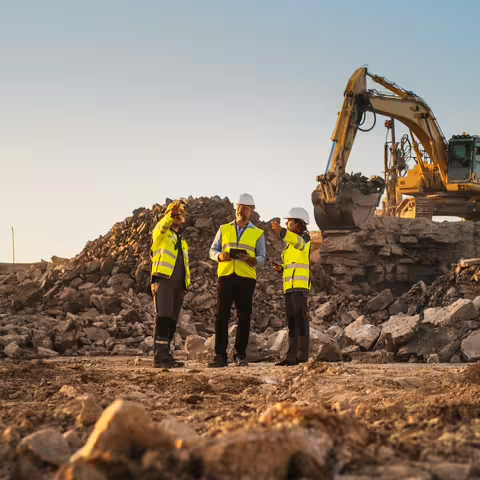
The construction industry is facing profound change: rising cost pressure, a shortage of skilled workers, volatile supply chains, growing sustainability requirements, and increasing complexity in planning, construction, and operation. At the same time, digitalization, industrialization, and new cooperation models are opening up enormous potential.

UNITY supports companies in the construction industry in systematically overcoming these challenges – from strategic realignment and industrial transformation to operational implementation. Our approach combines consulting, engineering, and implementation along the entire value chain: from planning and construction to operation and demolition.

The construction industry in transition

Whether you are a general contractor, system provider, planner, or industrial prefabricator, the demands placed on companies in the construction industry are changing fundamentally. Many companies still work with fragmented processes, media breaks, and isolated applications. This is exactly where we come in.

Bureaucracy is steadily increasing rather than decreasing
Projects are becoming more complex, margins tighter, and schedules shorter
Customers expect industrial quality, adherence to deadlines, and transparency
Sustainability, carbon footprint, and energy efficiency are becoming competitive factors
Digital tools are available—but rarely integrated throughout
  • Logo Sita
  • Logo Wago
  • Logo Viessmann
  • Logo Oventrop
  • Logo Schott
  • Logo Heroal
Our consulting services for the construction industry

UNITY pursues an end-to-end approach that consistently brings together strategy, processes, IT, and organization. We don't think of construction as an individual project, but as a scalable, industrial system.

Our consulting is based on four integrated service levels:

The digitalization of the construction industry must be thought through consistently and implemented pragmatically. UNITY supports companies in the construction industry in digitally connecting planning, construction, and operation and making data usable throughout the entire life cycle. The focus is on BIM, digital twins, and integrated IT architectures that bring together project management, production, and operations. This results in transparent, controllable construction processes, less friction, and a reliable basis for efficient projects and scalable business models.


Productivity and quality are key factors in competitiveness in the construction industry today. UNITY helps companies in the construction industry to measurably improve processes on the construction site, in prefabrication, and in organization. We optimize processes, material flows, and supply chains, increase the predictability of projects, and strengthen the performance of production and location networks. The goals are shorter throughput times, more stable deadlines, lower costs, and consistently high execution quality.


Serial, modular, and industrial construction is a key lever for controlling costs, quality, and speed. UNITY supports companies in the construction industry in developing modular product and platform concepts and in designing efficient production and assembly processes. The close integration of planning, prefabrication, and construction results in scalable solutions that enable a wide range of variants while remaining economically manageable.


Sustainability has long been an economic success factor in the construction industry. UNITY supports companies in systematically integrating sustainability into products, processes, and projects. The focus is on resource-saving construction methods, energy-efficient buildings, and transparent CO₂ and ESG indicators. This makes sustainability plannable, controllable, and compatible with economic efficiency—from planning to operation.


Project Stories construction industry

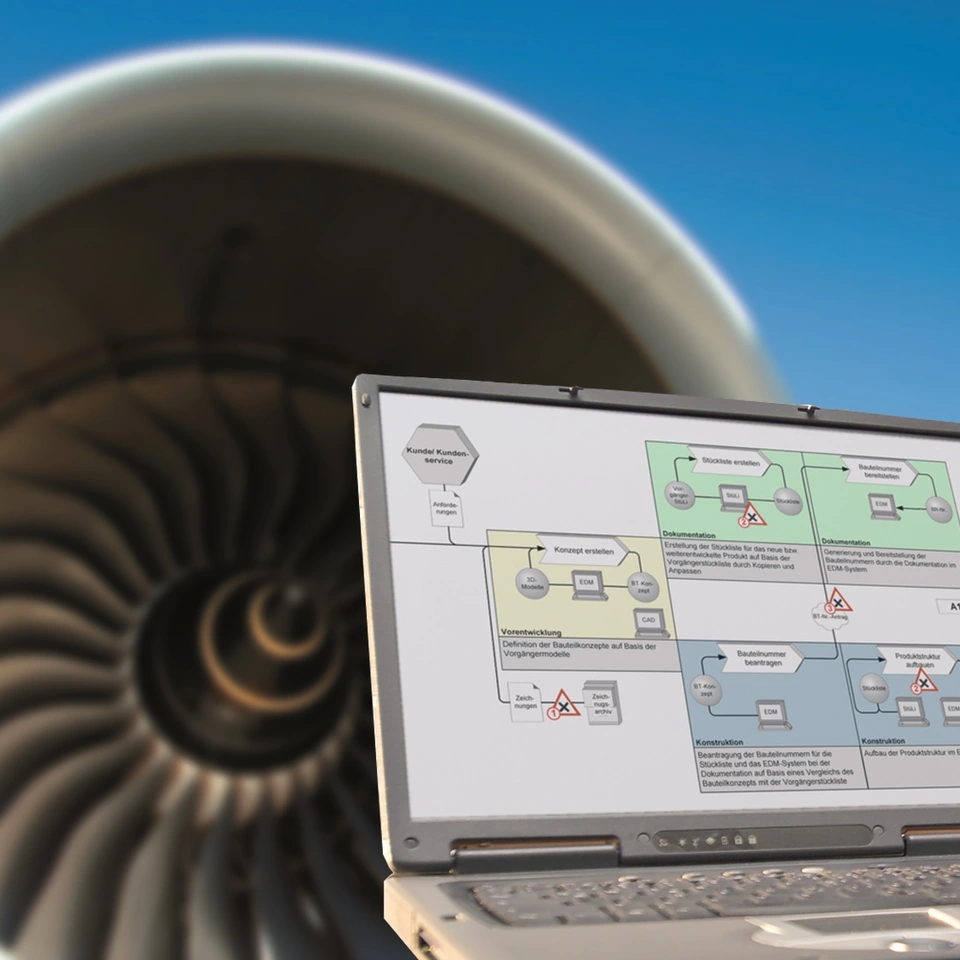
Process analysis for an integrated view of the DMU equipment process

Airbus Logo
Reduced Development Time through Consequential Process Management

Whether involved in planning, construction or manufacturing, UNITY has been involved in shortening development times for the largest passenger aircraft ever built, the Airbus A380, and reducing costs for Airbus for three years now. An example of a complex challenge that arose during the development of the A380 program is the equipping of each aircraft with electrical and non-flightrelevant devices. Depending on which airline is buying the airplane, the equipment requirements are different. Until shortly before the airplane is delivered, the customer still has the opportunity to customize how the equipment is configured according to his own requirements. For example, the interior equipment, air conditioning system and media technology system can all be customized.

To save time and money, computer-aided analysis (a "digital mock up” - DMU) is carried out before the equipment is actually installed. Suppliers to Airbus deliver CAD model data for every piece of equipment, and this can be checked and integrated into the digital reproduction of each A380. This requires high quality data and must be carried out at the right time. We found that this is precisely where the original DMU equipment process exhibited potential for improvement. Alongside the appropriate IT tools, the DMU equipment process is dependent above all on solutions in the areas of process and data management, as well as in the area of supplier integration. UNITY was assigned with optimizing these processes.

UNITY first conducted a process analysis that looked at the entire DMU equipment process as a whole. This step created additional transparency, bringing to light information about individual processes, resources, responsibilities and information flows for data suppliers and data users. From this analysis possibilities for improving organizational and IT-related aspects of the DMU equipment process became apparent. These were then prioritized and time-phased within the context of an overall implementation strategy.

For Airbus, the optimized DMU equipment process has tangible benefits: Lead times have been reduced, rectification costs have sunk and the degree of product maturity is now higher at an earlier stage.

Reduced Development Time

Reduced rework costs

Product maturity increased at an early stage

“With their methodical way of proceeding and their high degree of competence in terms of processes and technology, UNITY helped put us in the position to initiate a comprehensive improvement program for the DMU equipment process for the A380. With this program we were able to significantly shorten the lead time required for the integration of the equipment.”

Klaus Schwietzer

Development Manager A380 Germany

Airbus

Your Contact

Michael Wolf

Partner, Business Area Lead

Hamburg, Germany
Contact us
We understand the entire construction value chain—from planning and construction to operation and demolition.

This enables us to offer holistic solutions that address interfaces and bridge silos.

Schedule an appointment with our experts

Your contacts for the construction industry
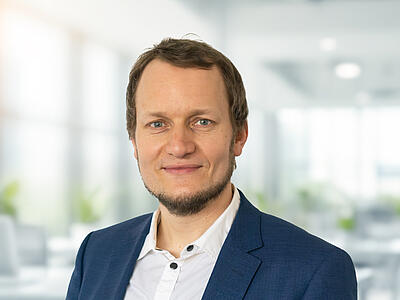
Thorben Kerkenberg

Partner, Head of Smart Factory & Operational Excellence

Hamburg, Germany
Contact us

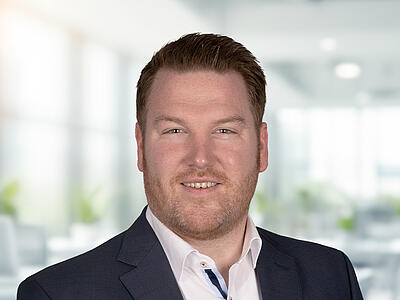
Martin Ramm

Business Area Lead

Hamburg, Germany
Contact us